Can Playing Golf Indoors Actually Improve Your Outdoor Game?

The core reason indoor golf works as a practice tool comes down to data and repetition. On a real range, you hit a ball, watch it fly, form a rough impression, and hit another one. Your feedback loop is imprecise — you're estimating carry distance, guessing at spin, and relying on ball flight observations that vary with wind, light, and your own perception. A quality launch monitor gives you exact numbers on every swing: club speed, ball speed, smash factor, launch angle, spin rate, face angle at impact, club path, and angle of attack. That's not just more information — it's a fundamentally different kind of practice, because you're working with facts instead of impressions.

Our Services →

Does Indoor Golf Actually Improve Your Game? Here's the Honest Answer

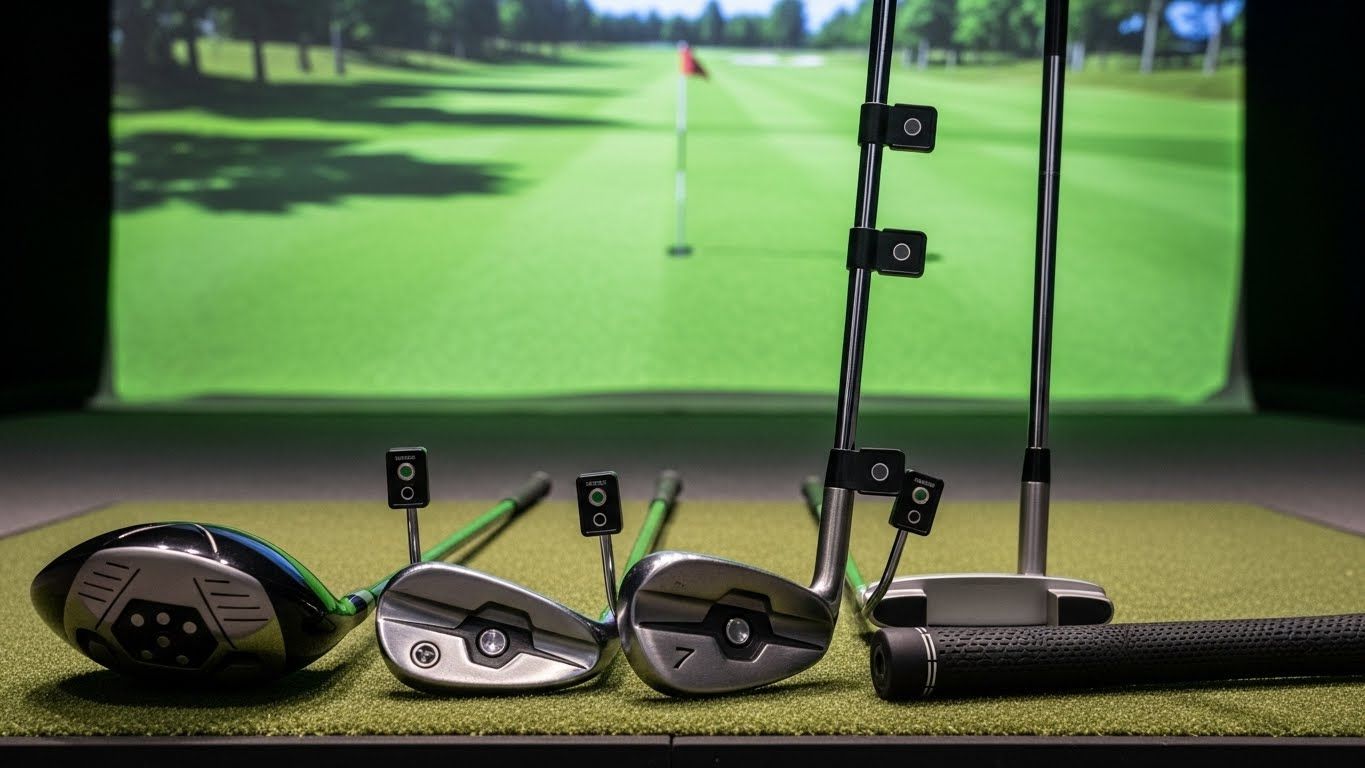
Picture of Golf Clubs

The skepticism is understandable. Hitting into a screen in your garage feels different from standing on a real tee box with wind in your face and real consequences. So the question of whether indoor golf improves your game is a fair one — and the answer is yes, genuinely, but with some important caveats about how you use the technology.


The improvement question gets interesting when you look at what actually separates better golfers from worse ones. It's rarely raw athleticism. It's consistency — the ability to repeat a functional swing under varying conditions, and to understand what your ball flight is telling you about what the club is doing. Indoor golf accelerates that understanding dramatically because the feedback is immediate and objective. You stop guessing why the ball went left. The data tells you the face was two degrees closed and the path was out-to-in, and now you have something specific to work on.


estimated_quoteArtboard 3

Get a Free Quote

Contact Us

Residential & Home Golf Simulator Installation

That said, does indoor golf improve your game if you're just playing virtual rounds without paying attention to the numbers? Probably less than you'd hope. The golfers who get the most out of simulators use them intentionally — they spend time in practice range mode working on specific ball flights, they bring the data to lessons with an instructor who can interpret it, and they use the course simulation as a testing environment rather than just entertainment. The technology is only as useful as the attention you bring to it.


Short game is the honest limitation. Most simulator setups aren't built for chipping and putting, and those shots — everything inside 100 yards — account for the majority of strokes for most amateur golfers. You can practice your full swing extensively indoors and come out in spring with a genuinely better ball-striking game while your short game is exactly where you left it in November. If you're building a serious indoor practice routine, supplement it with a putting mat, a net for chip shots if your space allows, and deliberate short game work whenever you do get on a real course.


The consistency of practice is where indoor golf's impact on your game is most clearly felt. Golf is a skill that degrades without regular repetition — most golfers know the feeling of coming back after two or three weeks off and finding their timing is gone. An indoor setup removes the friction that causes those gaps. You don't need to drive anywhere, you're not dependent on weather or daylight, and a 30-minute practice session before work becomes genuinely possible. That regularity matters more than any single thing about the technology itself. Consistent practice, even in shorter sessions, outperforms occasional marathon range sessions for skill development.


There's also a mental component worth mentioning. Playing simulated versions of real courses — and playing them repeatedly — builds a kind of strategic familiarity that translates to real golf in subtle ways. When you've played the same virtual course 20 times, you develop instincts about club selection and course management that mirror real-course experience. Tour players use simulators for exactly this purpose before tournaments, not just for swing work.


The equipment matching benefit is underappreciated too. A launch monitor gives you data precise enough to identify whether your equipment actually fits your swing — shaft flex, loft, lie angle, ball selection. Getting properly fit based on real ball flight data rather than a fitter's visual assessment can shift your performance meaningfully, and that process happens much more accurately with good simulator technology.

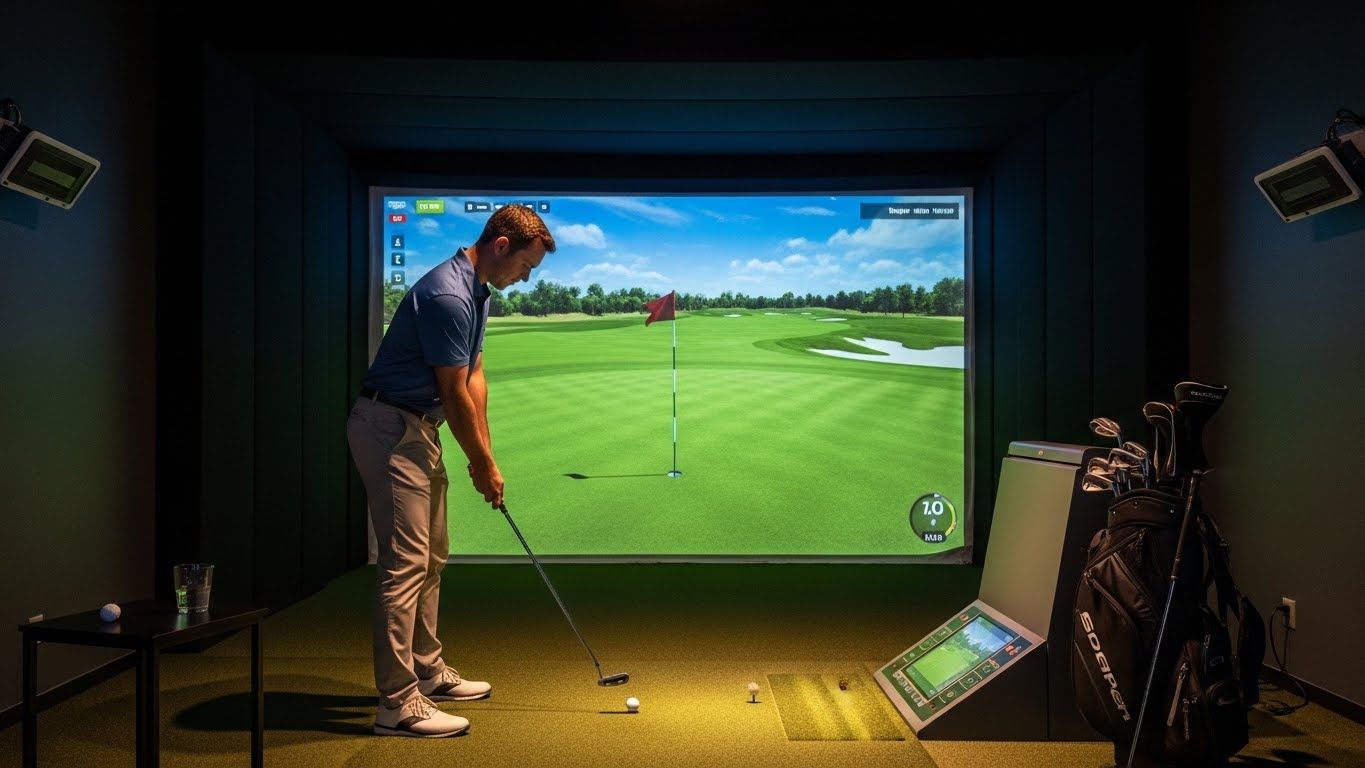
So does indoor golf improve your game? Yes — consistently and meaningfully for ball-striking, somewhat for course management, and less so for short game unless you're deliberately addressing it. The golfers who see the biggest gains are the ones who treat the technology as a practice tool rather than a game, stay curious about what the data is telling them, and show up regularly enough to build real consistency. The screen in the garage can absolutely make you a better golfer. What happens in front of it is up to you.

Colorado Springs Indoor Golf Installation Near Me?

Broadmoor, CO
Northgate, CO
Briargate, CO
Flying Horse, CO
Old North End, CO
Cathedral Pines, CO
High Forest Ranch, CO
Cedar Heights, CO

Peregrine, CO
Winsome, CO
Rockrimmon, CO
Cordera, CO
Wolf Ranch, CO
Black Forest, CO
Monument, CO
Manitou Springs, CO