
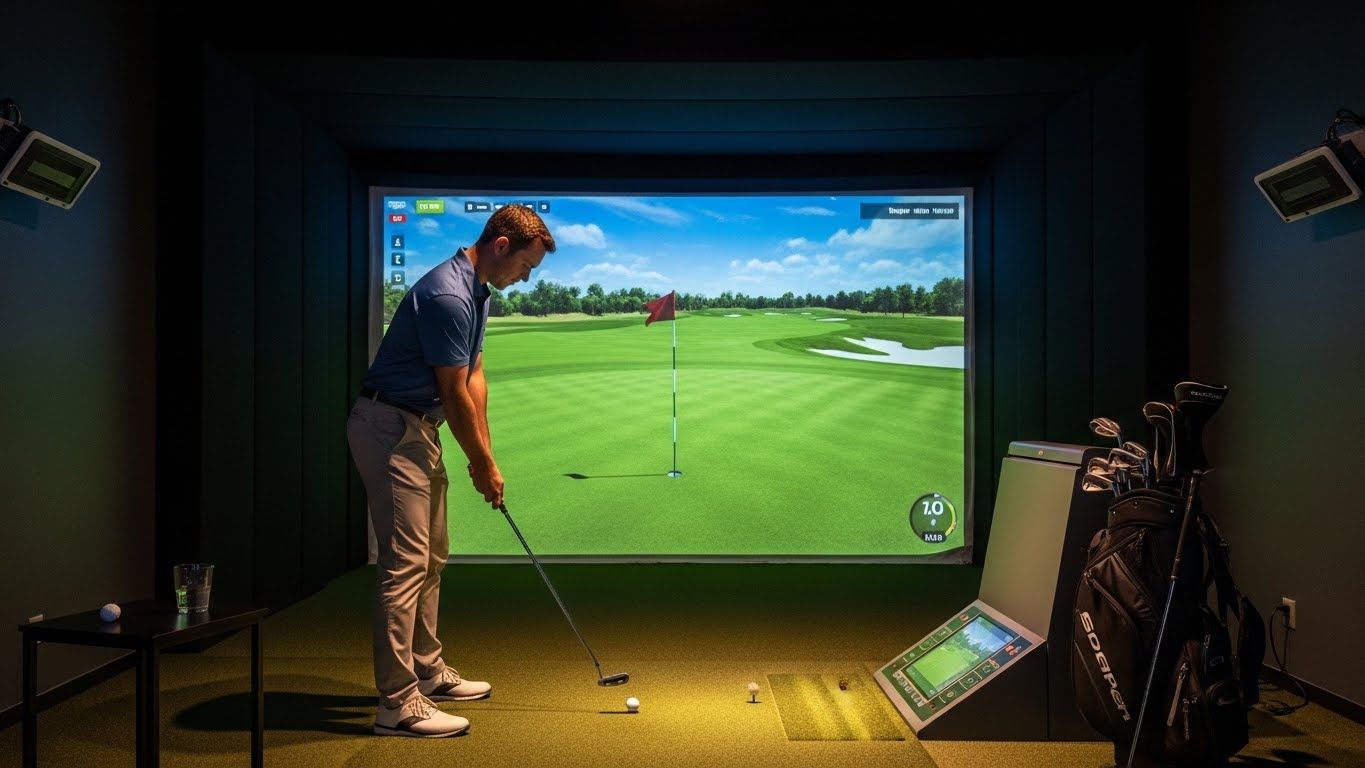
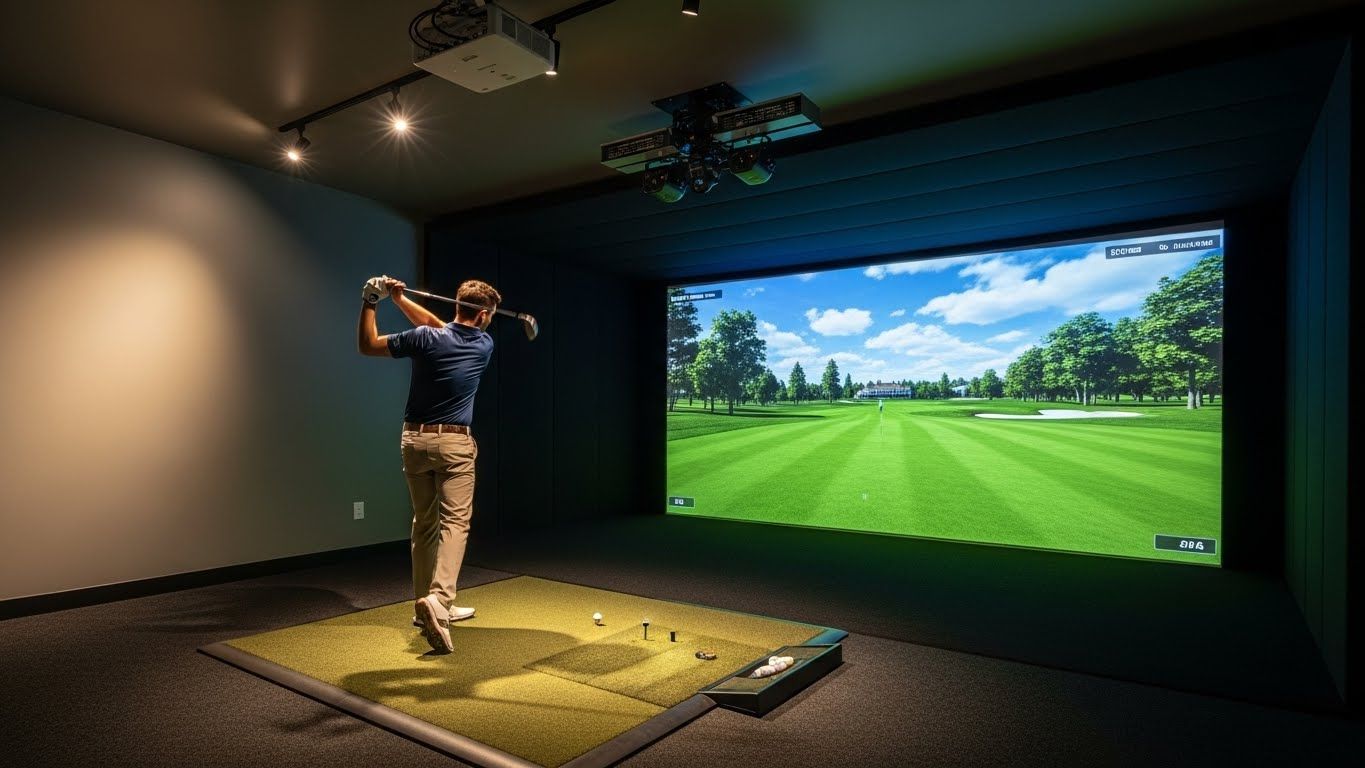
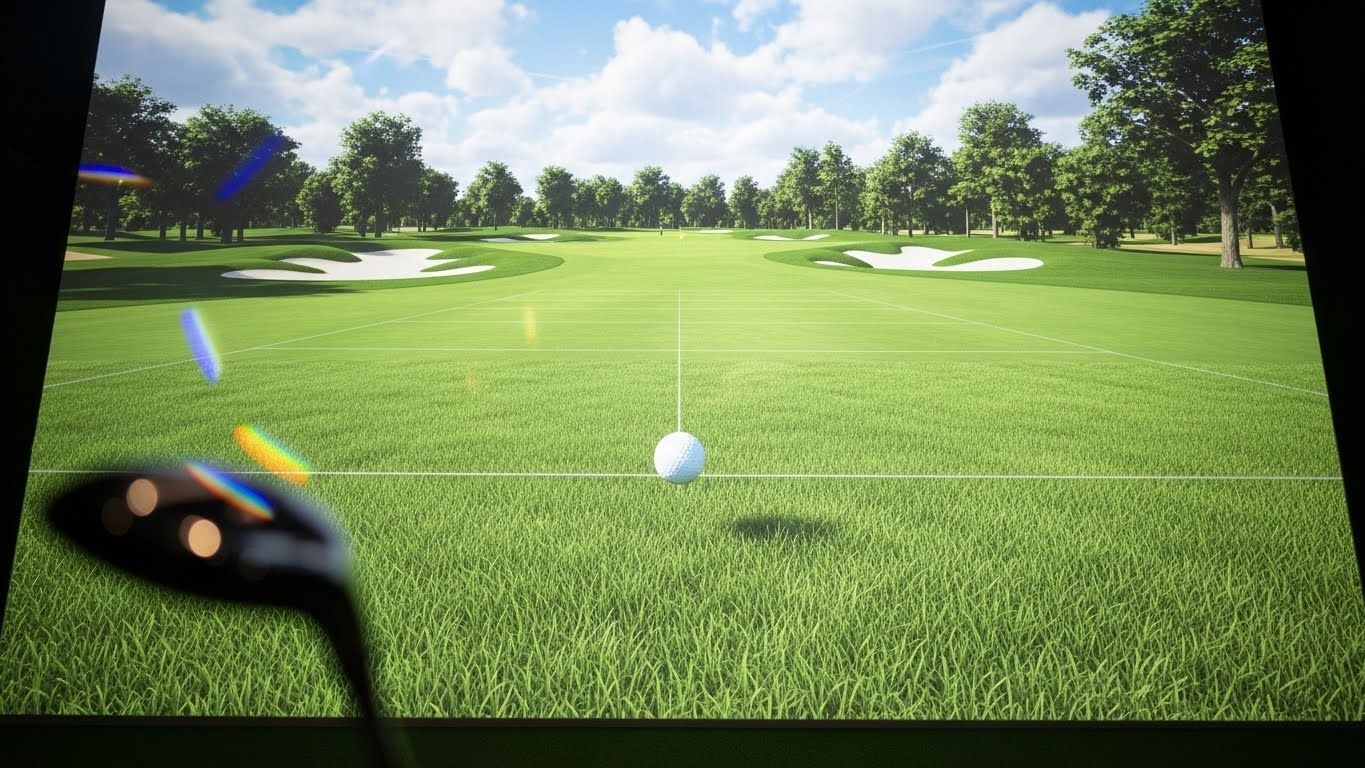
The physical setup is simpler than it looks. You'll be in a bay — usually a room or partitioned space — with a hitting mat on the floor, a large projection screen in front of you, and sensors or cameras positioned around the area to capture your shots. Depending on the system, the tracking technology might be in the floor, mounted on a bar behind the ball, or built into the ceiling. You don't need to understand exactly how it works. Just know that when you hit the ball into the screen, the system reads your shot and shows you where it lands on the simulated course or driving range on the display. It all happens within a second or two, and it becomes intuitive quickly.
What to Expect Your First Time at an Indoor Golf Facility
Walking into a simulator bay for the first time can feel a little disorienting if you don't know what you're walking into. The setup is unfamiliar, there's usually a screen full of settings and options, and if you're with other people, nobody wants to admit they have no idea what they're doing. So here's what to expect at an indoor golf simulator your first time, so you can show up relaxed and actually enjoy it.
Does Indoor Golf Actually Improve Your Game? Here's the Honest Answer
Get a Free Quote
Contact Us
Residential & Home Golf Simulator Installation
Most venues will do a brief orientation when you arrive, but don't count on an in-depth tutorial. A staff member will usually show you how to navigate the menu, select a course or practice mode, and enter your players — and then you're largely on your own. If you've never used the specific system before, don't be shy about asking for a few extra minutes of explanation. The menus on most simulators are pretty logical once someone walks you through the basics, but they can look overwhelming if you're trying to figure it out solo mid-session while the clock is running.
On the golf itself: your first few shots will probably feel strange, and that's completely normal. Hitting off a mat is different from real turf, and the visual experience of a screen in front of you instead of an open fairway takes a little getting used to. Give yourself five or ten shots just to calibrate. You'll likely hit the ball a touch differently than you do outdoors — some people swing harder, some people tense up — and it takes a few minutes to settle into a normal rhythm. If you're playing with friends who are also new, everyone's in the same boat, which makes it more fun and less self-conscious.
One thing a lot of people don't anticipate when thinking about what to expect at an indoor golf simulator for the first time is just how much data you're suddenly looking at. Most systems display ball speed, club speed, launch angle, spin rate, carry distance, and shot shape all at once after every swing. For experienced golfers, that's gold. For beginners or casual players, it can feel like information overload. The simplest approach is to ignore most of it at first and just focus on where the ball ended up on the screen. As you get more comfortable, the numbers start to tell a useful story — but on your first visit, don't let the data distract you from just having a good time.
Course selection matters more than people realize. If you pick a long, difficult course — Pebble Beach, St. Andrews — on your first visit, it can feel slow and frustrating, especially if you're a higher handicapper. A shorter or more forgiving course keeps the pace up and the fun level high. Most venues also offer a driving range or skills challenge mode, which is genuinely a great option if you'd rather just hit shots and see the feedback without worrying about keeping score. There's no rule that says you have to play a round.
Pace-wise, a group of four playing 9 holes typically takes about an hour to an hour and a half depending on how quickly everyone plays and how much time gets spent chatting between shots. Booking a bit more time than you think you'll need on your first visit is smart — you won't regret having extra time to experiment, and it removes the pressure of rushing.
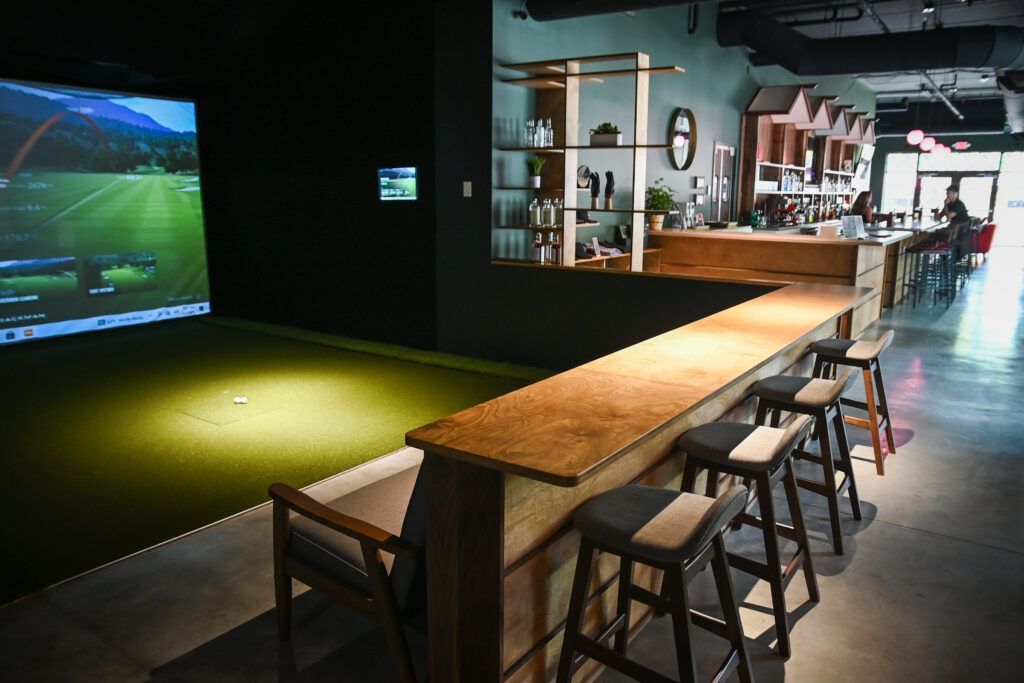
The last thing worth knowing about what to expect at an indoor golf simulator your first time is that it's more social than most people anticipate. The bay setup means everyone's standing together watching each shot, reacting to good ones, giving each other a hard time about bad ones. It ends up feeling less like a practice session and more like an event, which is a big part of why people keep coming back.
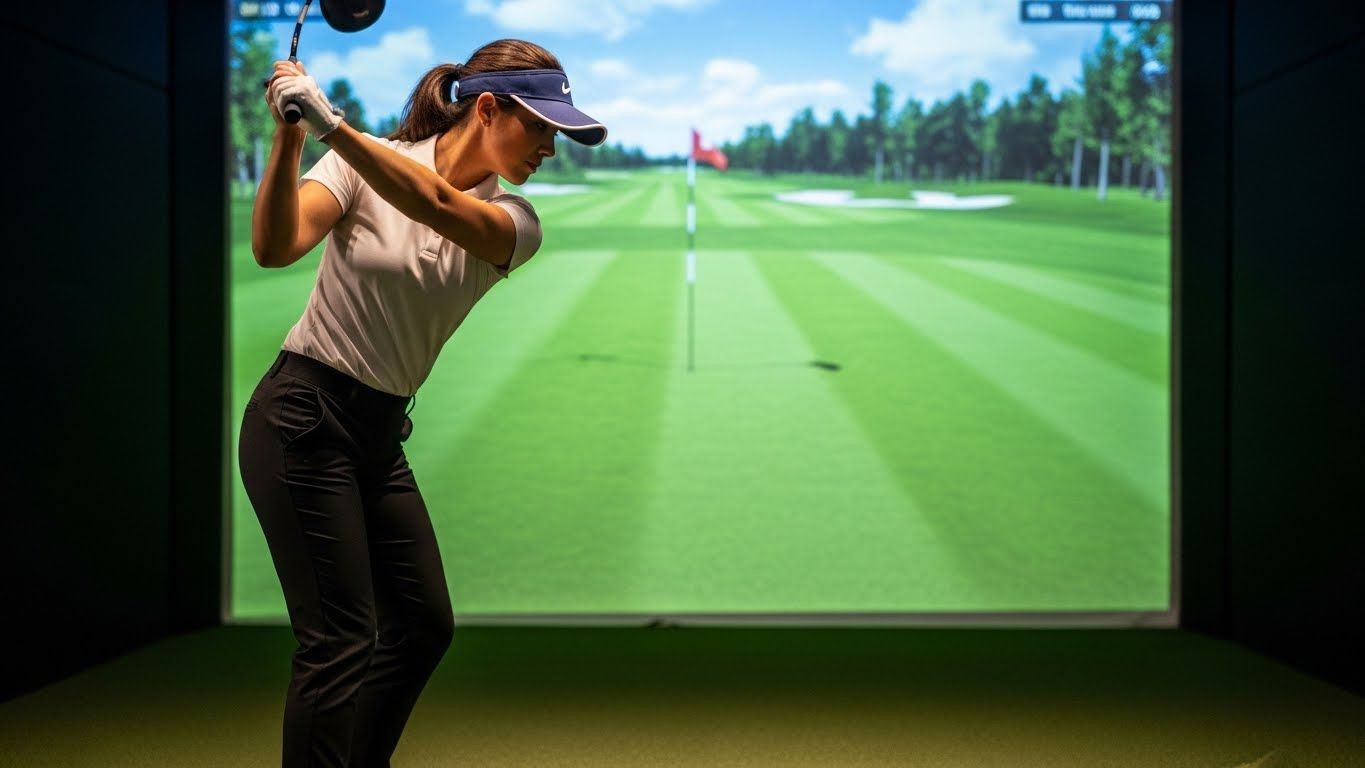

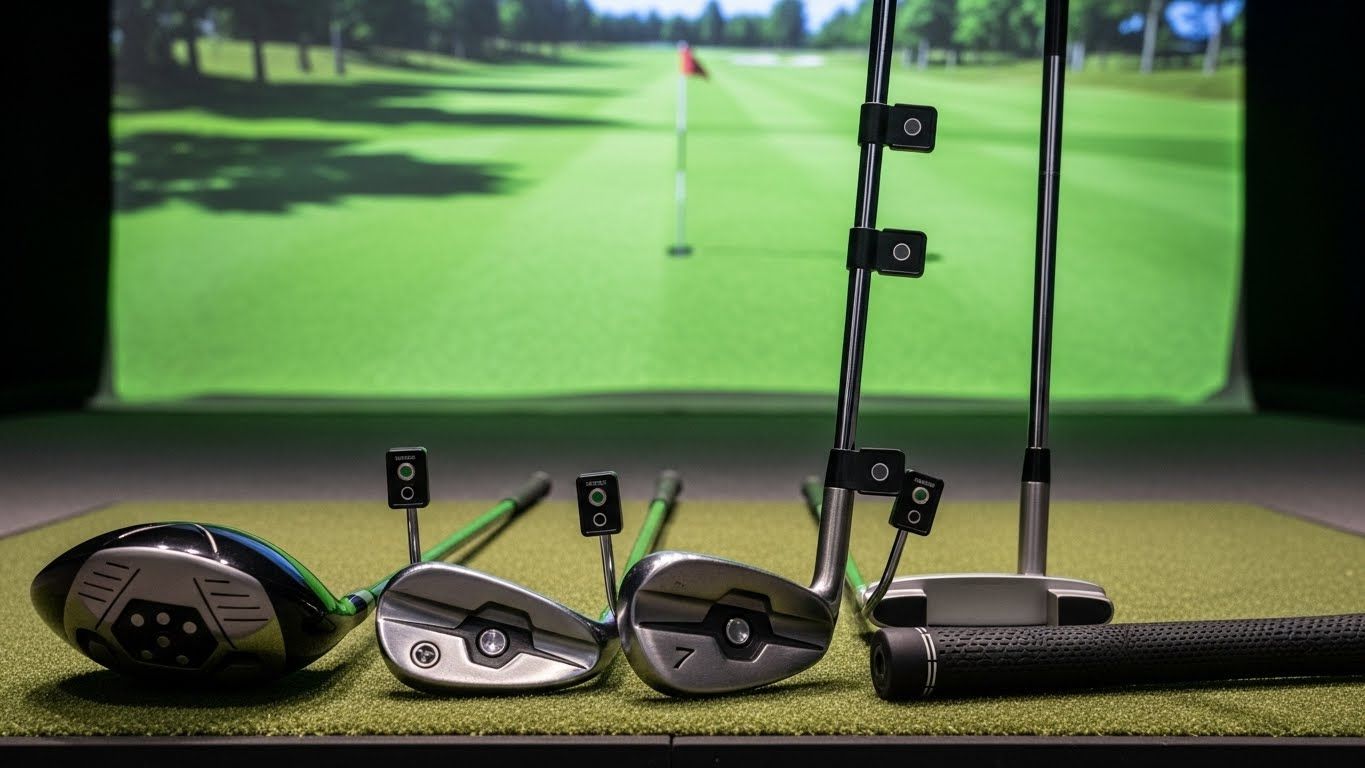
So does indoor golf improve your game? Yes — consistently and meaningfully for ball-striking, somewhat for course management, and less so for short game unless you're deliberately addressing it. The golfers who see the biggest gains are the ones who treat the technology as a practice tool rather than a game, stay curious about what the data is telling them, and show up regularly enough to build real consistency. The screen in the garage can absolutely make you a better golfer. What happens in front of it is up to you.
Colorado Springs Indoor Golf Installation Near Me?
Broadmoor, CO
Northgate, CO
Briargate, CO
Flying Horse, CO
Old North End, CO
Cathedral Pines, CO
High Forest Ranch, CO
Cedar Heights, CO
Peregrine, CO
Winsome, CO
Rockrimmon, CO
Cordera, CO
Wolf Ranch, CO
Black Forest, CO
Monument, CO
Manitou Springs, CO